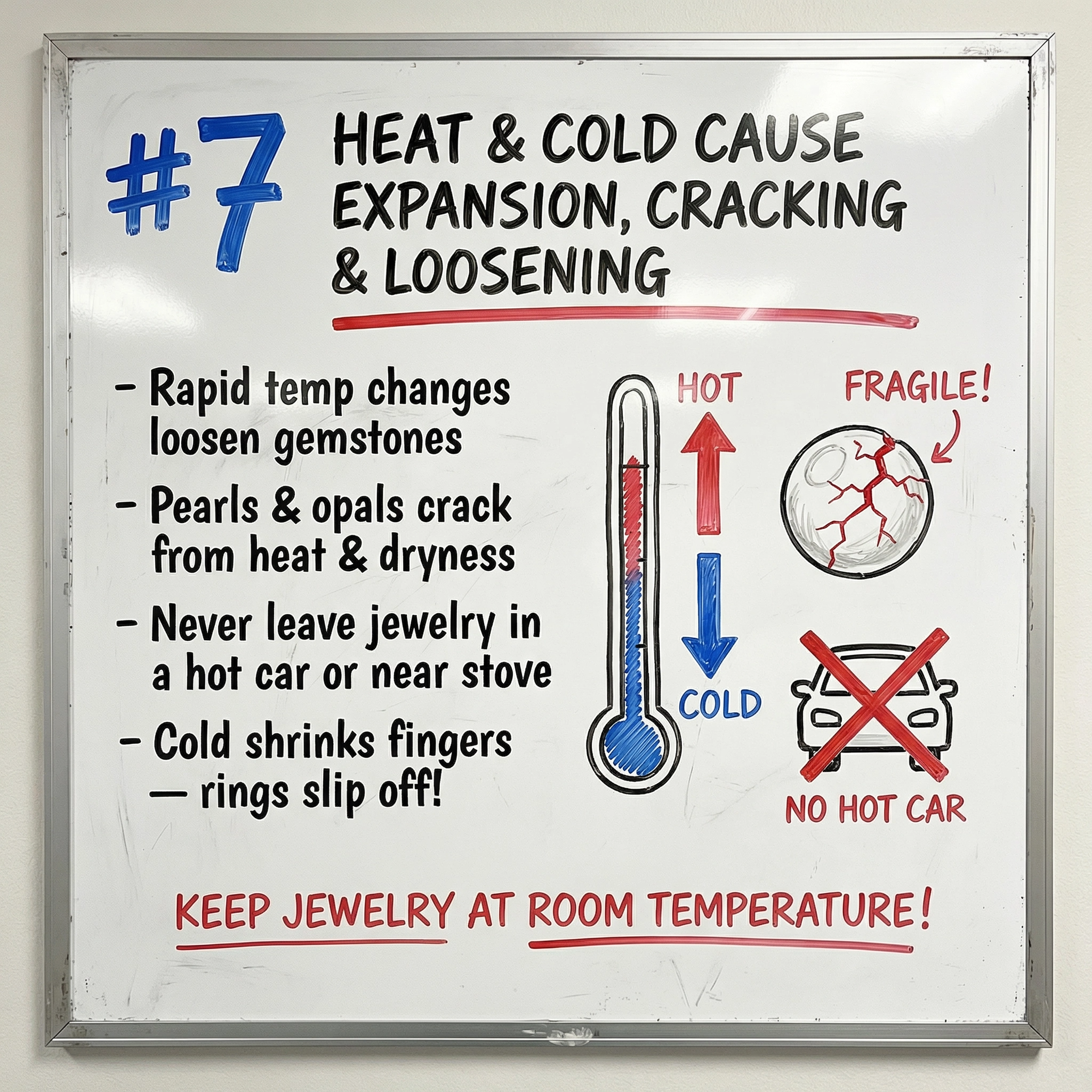
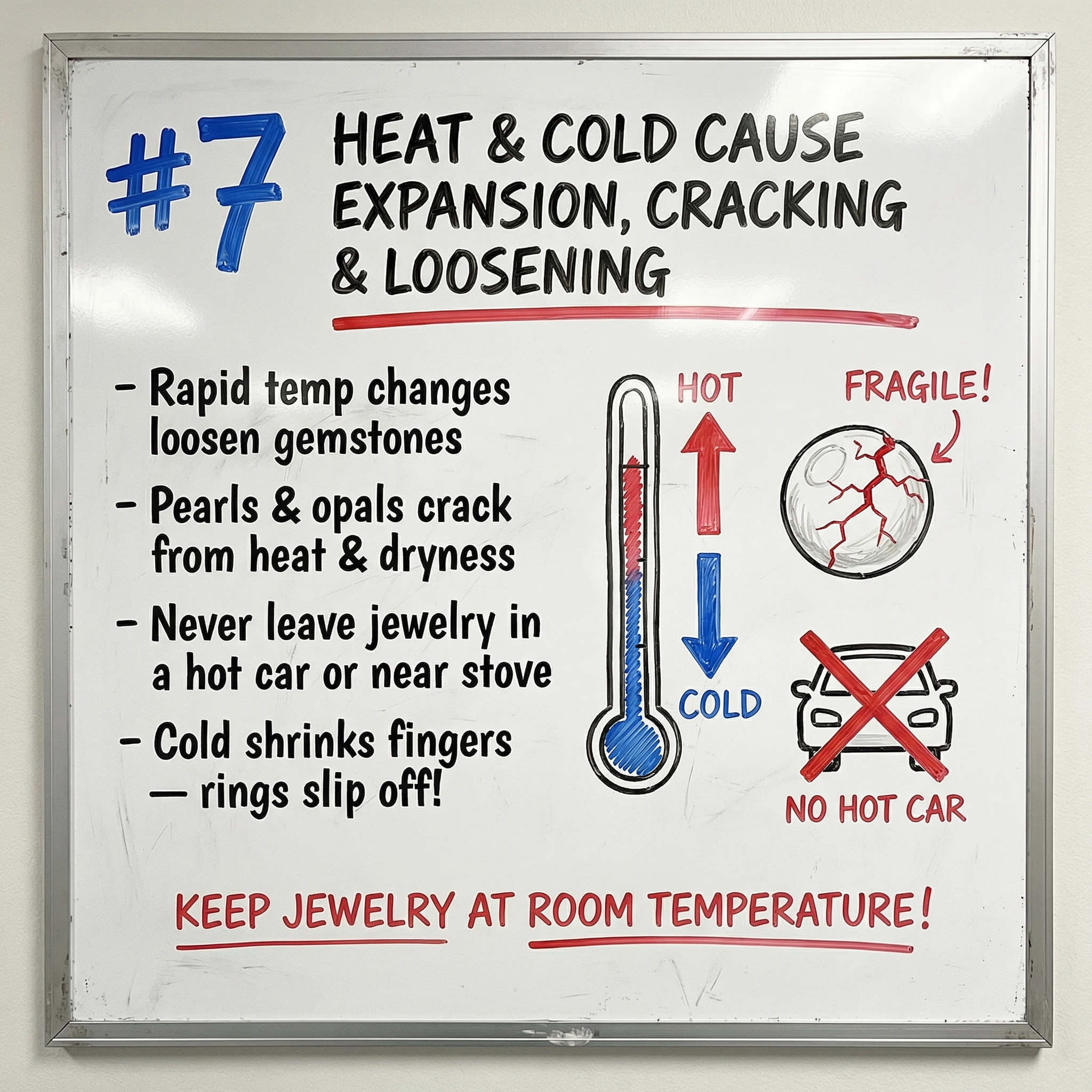
Tip #7 addresses an environmental factor many people completely overlook when caring for their fine jewelry: extreme temperatures. Whether you are traveling to a tropical destination, skiing in the mountains, or simply leaving your rings in a hot car, heat and cold can cause serious structural issues for your jewelry that you might not notice until it is too late.
Metals naturally expand when heated and contract when cooled. While this expansion and contraction is microscopic, rapid temperature changes can cause the metal settings holding your gemstones to shift, warp, or loosen. If a setting expands in the heat, the prongs may no longer grip the stone tightly, resulting in a loosened gemstone that could easily fall out with a slight bump.
Certain organic and delicate stones, such as pearls, opals, and emeralds, are particularly vulnerable to temperature fluctuations. These stones contain trace amounts of water or natural oils. Excessive heat and dryness can actually cause them to dehydrate, crack, or completely shatter. This is known as "crazing" in opals, and it permanently destroys the stone's beauty and structural integrity.
Never leave your jewelry sitting in a hot car, resting near a stove or fireplace, or exposed to direct, intense sunlight for prolonged periods. Conversely, remember that cold weather causes your fingers to shrink slightly, significantly increasing the risk of your rings slipping off unnoticed when you take off your gloves. Keeping your jewelry at room temperature, in a stable environment, is always the safest bet for its longevity.
Written by

Nick Lannan
1 min read
Looking to connect with like minded individuals! I love making jewelry 30 years on the bench! I also trade stocks and shoot guns regularly! I eat burgers and hot wangs! 5.5 years no alcohol! Father of 4 amazing people! Lets make something happen!
Enjoyed this post? Share it
Get Nick’s next post in your inbox
No spam, just new posts when they go live. Unsubscribe anytime in one click.